
Who is the father of the computer?(फादर ऑफ कंप्यूटर)
father of computer charles babbage history
Charles Babbage was considered to be the father of computing after his concept, and then later the invention of the Analytical Engine in 1837. The Analytical Engine contained an ALU (arithmetic logic unit), basic flow control, and integrated memory; hailed as the first general-purpose computer concept. Unfortunately, because of funding issues, this computer was not built while Charles Babbage was alive.
However, in 1910 Henry Babbage, Charles Babbage's youngest son was able to complete a portion of the machine that could perform basic calculations. In 1991, the London Science Museum completed a working version of the Analytical Engine No 2. This version incorporated Babbage's refinements, which he developed during the creation of the Analytical Engine.
Although Babbage never completed his invention in his lifetime, his radical ideas and concepts of the computer are what make him the father of computing.
Father of the computer
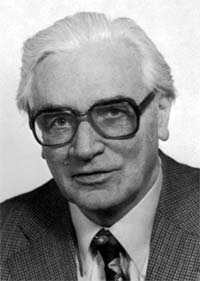
There are several people who can be considered the father of the computer including Alan Turing, John Atanasoff, and John von Neumann. However, we consider Konrad Zuse as the father of the computer with the advent of the Z1, Z2, Z3, and Z4.
From 1936 to 1938, Konrad Zuse created the Z1 in his parent's living room. The Z1 consisted of over 30,000 metal parts and is considered to be the first electromechanical binary programmable computer. In 1939, the German military commissioned Zuse to build the Z2, which was largely based on the Z1. Later, he completed the Z3 in May 1941, the Z3 was a revolutionary computer for its time and is considered the first electromechanical and program-controlled computer. Finally, on July 12, 1950, Zuse completed and shipped the Z4 computer, which is considered to be the first commercial computer.
टिप्पणियाँ